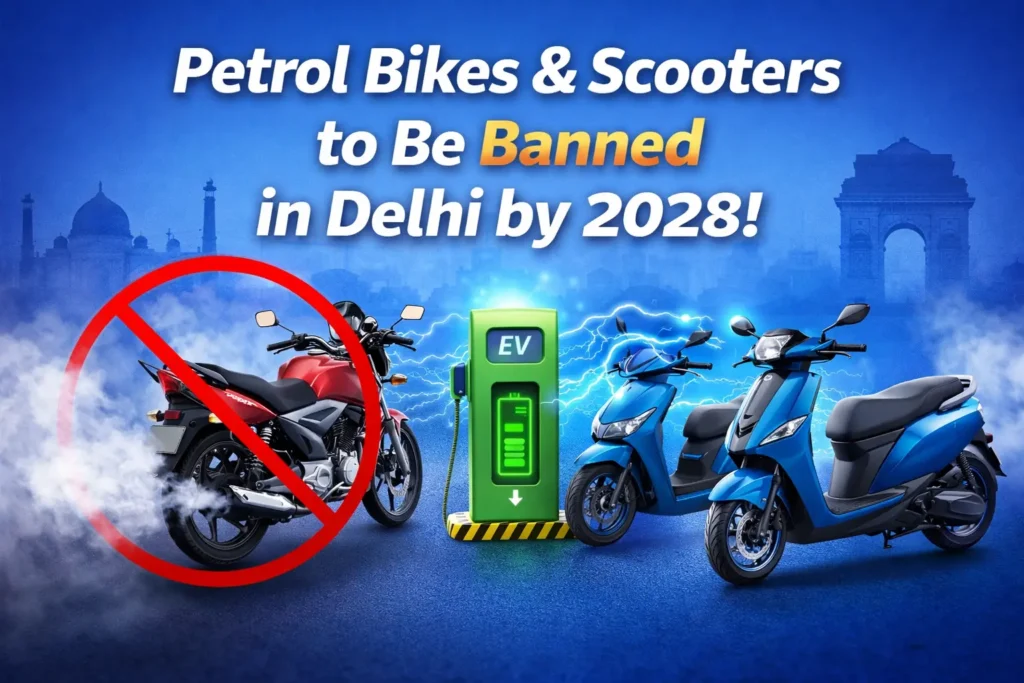

n a bold and transformative move to tackle rising air pollution, the government of Delhi has proposed a complete phase-out of petrol-powered bikes and scooters. According to the Draft Electric Vehicle Policy 2026–2030, the capital is aiming for a full transition to electric two-wheelers by April 1, 2028. This ambitious plan marks one of the most aggressive clean mobility initiatives in India.

Why the Government Is Taking This Big Step
The decision is largely driven by the alarming air pollution levels in Delhi, especially during winter when smog blankets the city. Vehicular emissions are a major contributor to this crisis.
A key factor behind targeting two-wheelers is their overwhelming presence on roads. Around 67% of all vehicles in the city are bikes and scooters. This means that out of every 100 vehicles, nearly 67 are two-wheelers, making them the largest contributors to traffic-related pollution.
Authorities believe that electrifying this segment will bring the fastest and most noticeable improvement in air quality.
What Will Change and When?
Under the proposed policy:
- From April 1, 2028, registration of new petrol and CNG bikes and scooters will be completely stopped. Only electric two-wheelers will be allowed for new registrations.
- Existing petrol vehicles will not be banned immediately and can continue to operate, ensuring a gradual and smooth transition.
- From January 1, 2027, new registrations of three-wheelers (autos) will be limited to electric models only.
- Commercial vehicles such as delivery bikes and taxis will begin transitioning to electric even earlier.
This phased approach ensures that people and businesses have enough time to adapt.
A Larger Vision Beyond Two-Wheelers
The policy is not limited to bikes and scooters. It outlines a comprehensive plan to electrify multiple transport segments, including:
- Public buses and school buses
- Government vehicles
- Delivery and logistics fleets
All new vehicles purchased by government departments will be electric, reinforcing the commitment to sustainable mobility.
Benefits and Incentives for Citizens
To make the transition easier and more attractive, the government is offering several incentives:
- Subsidies on electric two-wheelers based on battery capacity
- Up to ₹1 lakh rebate on electric cars
- 100% exemption from road tax and registration fees
- Incentives ranging from ₹10,000 to ₹1 lakh for scrapping old vehicles
These benefits are designed to reduce the upfront cost of EVs and encourage faster adoption.
Charging Infrastructure Expansion
A major concern with electric vehicles is charging availability. To address this, the government has assigned Delhi Transco Limited the responsibility of expanding charging infrastructure across the city.
Plans include:
- Setting up public charging stations across key locations
- Mandatory charging points at vehicle dealerships
- Development of battery recycling systems to prevent environmental harm
A Crucial Step for Public Health
The move is not just about cleaner transport but also about improving public health. Every year, residents of Delhi face hazardous air quality levels, leading to respiratory issues and other health concerns.
By reducing emissions from the largest vehicle segment, the government aims to create a cleaner, healthier environment for future generations.